
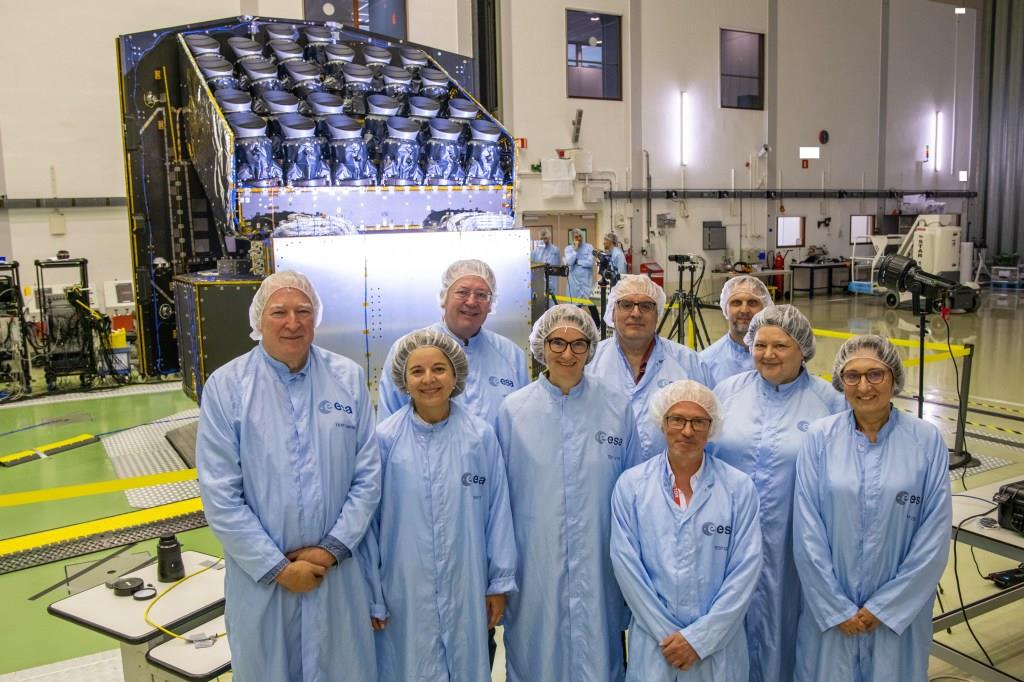
Padua – Rome, 17 February 2026. The hunt for a “second Earth” enters today its most operational phase. The PLATO Mission Consortium of the European Space Agency (ESA) has released the PLATO Input Catalog (PIC): the definitive list of stars that the satellite will observe over the coming years. This represents a fundamental milestone for the mission and one in which Italy plays a leading role. The Space Science Data Center of the Italian Space Agency (ASI–SSDC) is responsible for producing the PIC, selecting and characterising the stars according to the specifications defined by the international consortium. Without this map, the satellite would not know where to point.
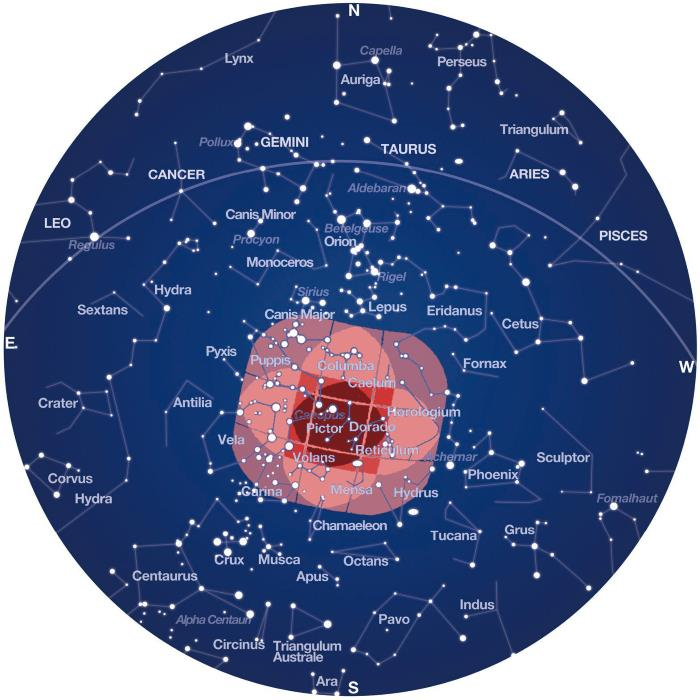
The objective is ambitious: to identify rocky planets located in the “habitable zone”, the distance range from a star in which liquid water may exist—an essential condition for life as we know it. With its 26 telescopes, whose opto‑mechanical components were designed by INAF researchers and built by Italian industry, PLATO will begin in 2027 to measure the brightness of PIC’s 290,000 stars continuously over several years. It will observe a field—LOng Pointing field South 2 (LOPS2)—of about 2,200 square degrees in the southern celestial hemisphere. The satellite will search for extremely small variations in stellar brightness (less than 80 parts per million for an Earth transiting the Sun) caused by a planet passing in front of its star. According to estimates, during its 4.5‑year mission PLATO will discover at least 5,000 new exoplanets, including about 500 Earth‑sized ones. Many of them will lie in habitable zones. Scientists are confident that some may be true Earth twins.
Prof. Giampaolo Piotto of the Department of Physics and Astronomy at the University of Padua, and Director of CISAS, is responsible for the PIC for the PLATO mission. He explains: “The publication of the catalogue is an essential step for PLATO. Without this list, PLATO would not know where to look for exoplanets analogous to Earth. PLATO will discover thousands of new exoplanets, and some of them will be very similar to Earth.”
Marco Montalto, researcher at INAF–Catania, adds: “The PLATO observing field in the southern hemisphere was selected not only for the number of stars suitable for hosting planets, but also for the synergy with major ground-based telescopes in Chile, which will later help measure the masses and densities of the newly discovered worlds.”
To assemble the PIC, the team coordinated by Padua began with a database of nearly 2 billion stars observed by ESA’s Gaia mission. From these, researchers selected 2.5 million dwarf and sub‑giant stars with surface temperatures between 3,200 and 6,700 degree Kelvin (the Sun is 5,770 K). This selection allowed the team to identify the LOPS2 as the sky region containing the highest number of stars most suitable for hosting planets. Finally, the most promising 290,000 stars were chosen for the PIC released today.
Paola Marrese, INAF researcher at ASI–SSDC and responsible for the final preparation of the catalog, notes: “It has been a monumental effort, lasting more than 15 years, beginning with the selection of the most promising field to observe. Producing the PIC requires careful characterization of targets and their contaminants—from their positions on the celestial sphere to their photometric and astrophysical properties. Understanding the contaminants associated with each star is essential for later removing their light.”
Beyond the stars monitored for exoplanet detection, the PIC also includes stars used to maintain the satellite’s pointing stability and others used for calibration of onboard instruments and models for determining stellar mass, radius, and age.
The construction of PLATO’s 26 telescopes, its main onboard computer, and the preparation of the PIC have been managed and funded by ASI, which has strongly supported the mission from the beginning, involving leading national industry. The spacecraft is equipped with 26 cameras to study terrestrial-type exoplanets orbiting within the habitable zone of Sun-like stars.
The scientific instrumentation—cameras and electronic units—was developed through collaboration between ESA and the PLATO Mission Consortium, bringing together research centers, institutes, and industries across Europe. INAF researchers coordinated the assembly, testing, and verification of the 26 cameras, ensuring they meet the mission’s scientific requirements. The spacecraft was built by the PLATO Core Team, led by OHB in collaboration with Thales Alenia Space and Beyond Gravity.
PLATO is a medium‑class mission of ESA’s Cosmic Vision program. The spacecraft is now in its final stages and is expected to launch aboard an Ariane rocket from Europe’s spaceport in French Guiana between December 2026 and January 2027.
(link to original press release)
Credits: ESA / University of Padua / ASI Media Relations / INAF Press Office
 platomission.com
