

The European Space Agency’s PLATO spacecraft has safely arrived at ESTEC, ESA’s technical heart in the Netherlands. There, engineers will complete the spacecraft by connecting its solar panels and sunshield, and carry out a series of critical tests to confirm that Plato is fit for launch and ready for its planet-hunting mission in space.

The two main parts of the PLATO spacecraft were recently joined together at OHB’s cleanroom in Oberpfaffenhofen, Germany. On 1 September, PLATO arrived in the Netherlands by boat from Germany via the Rhine River. The vessel transporting it moored a few km away from ESTEC.
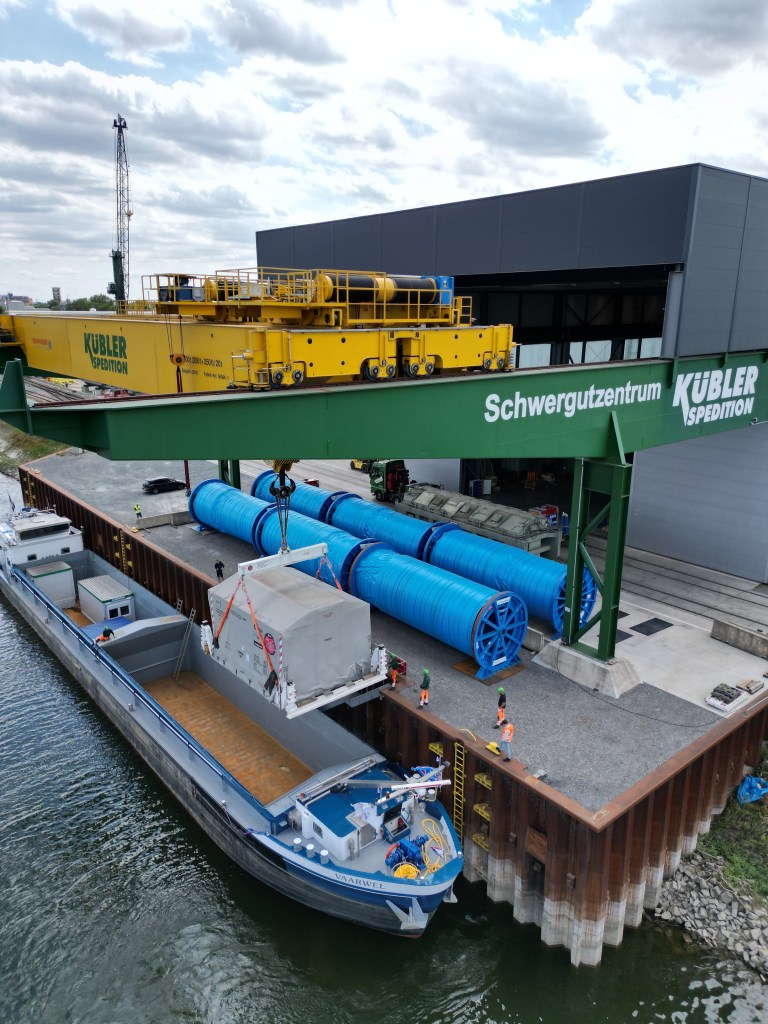
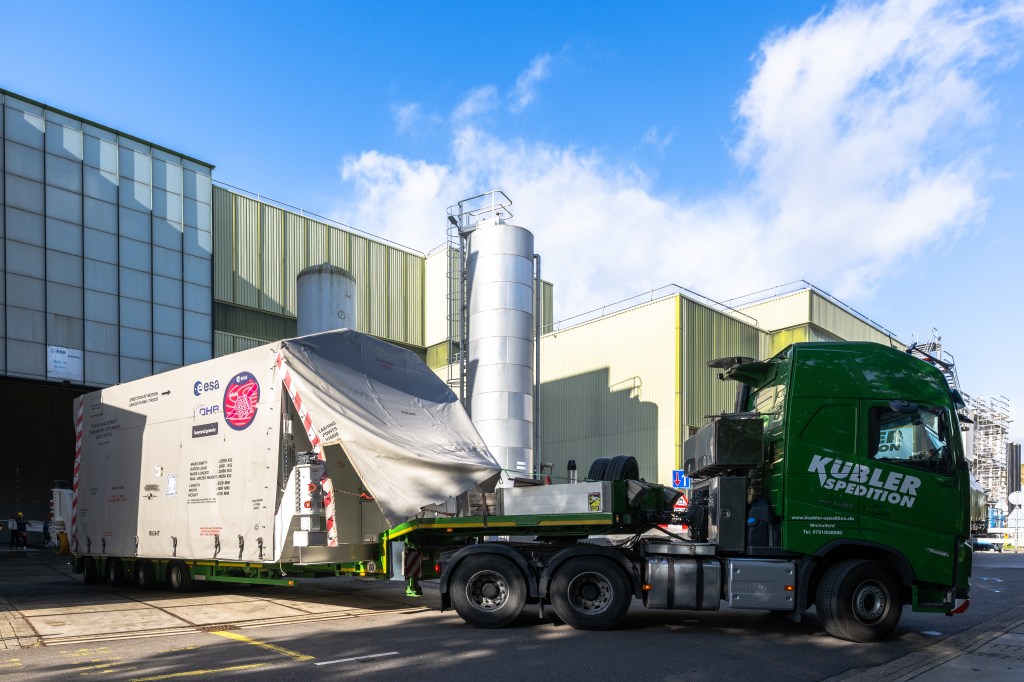
From there, PLATO was driven to ESA’s centre by special transport, carefully unloaded, and then moved to a cleanroom.


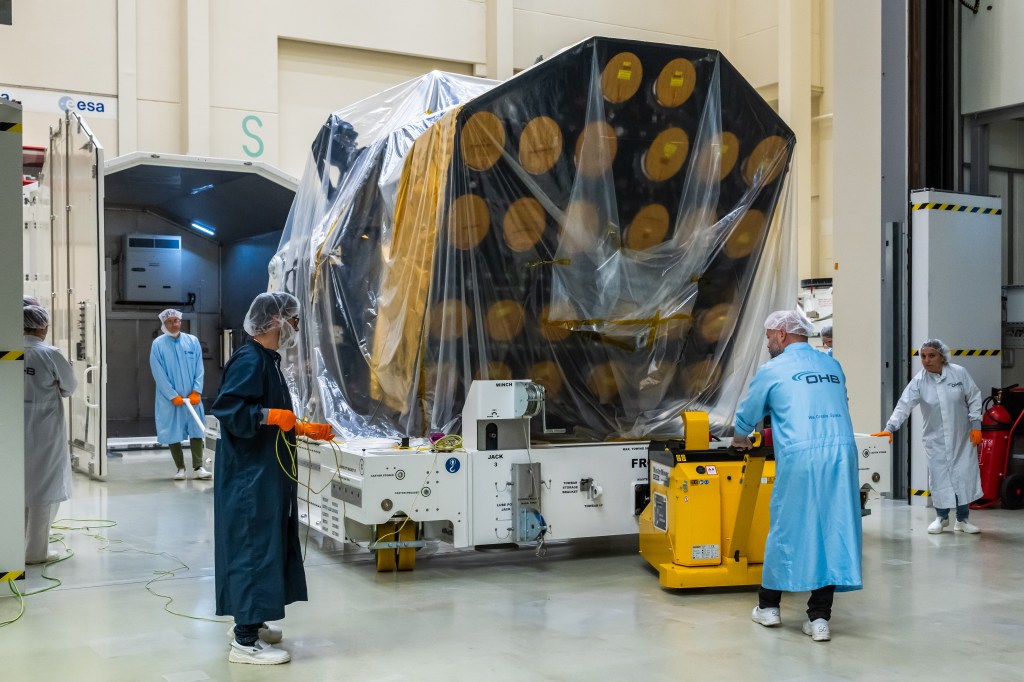


What’s next for Plato
In the coming weeks, engineers will mount the remaining essential part of the spacecraft: the combined sunshield and solar arrays module.
With the spacecraft complete, testing will begin. To determine that it can be safely launched, PLATO will undergo intense shaking and sound ‘bombardments’ during vibration and acoustic tests.
After these, the spacecraft will be placed into the Large Space Simulator – Europe’s largest vacuum chamber – to verify that it can withstand the extreme temperatures and emptiness of space and work well.
Credits: ESA – Media Relations
 platomission.com
